I had lunch with Warren Kramer after his morning consultations today and asked him, "What are the most common reasons people come to see you?" Here's what he said:
#1 FATIGUE!!
Weight Issues
Hypoglycemia
Skin Problems
Allergies
Arthritis
Osteoporosis
Headaches/Migraines
Reproductive Issues: PMS, Infertility, Menopause
Addictions
Heart Disease
High Blood Pressure
High Cholesterol
Anxiety, Fear, & Depression
Eating Disorders
Anemia
Warren is here to teach us all how we can address these naturally, using food and energetic medicine to heal ourselves. Restoring Your Natural Healing Ability is our first lecture! It's all about how to get out of the way so we can allow our bodies to heal and perform at their peak.
OPTIMAL HEALTH AND HEALING THROUGH MACROBIOTICS
Thursday, October 15, 2009

Friday, October 09, 2009
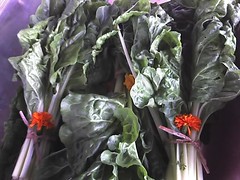
Chard and Marigolds
This afternoon, I had the wonderful opportunity to go to Kahumana Biodynamic and Organic Farm in Waianae, HI. We spent the first part of the afternoon in the field harvesting chard for the Waianae Farmer's Market and then went into the packing shed to wash and bunch the greens. My job was to bunch them together. Mother Earth certainly shares her bounty and only asks to be treated respectfully in return.
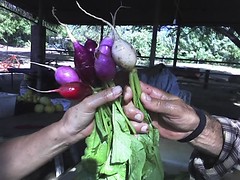
Easter Egg Radishes
One of the additional vegetables that was harvested are these gorgeous Easter egg radishes. They just seemed positively triumphant in this photo!
Wednesday, October 07, 2009
Warren Kramer cooking classes coming soon!
Cooking for Hearty Appetites:
Fried Chickpea Patties
Pinto Bean Soup
Sweet Vegetable Jam on Steamed Bread
Coleslaw w/Tahini Mayo
Stirfried Portabello Mushrooms and Broccoli Rabe
Pear and Apple Pecan Crisp
Cooking for Natural Beauty:
Hato-Mugi and Bean Salad
Cucumber Soup
Light and Refreshing Pressed Salad with Citrus Dressing
Boiled Daikon w/Sweet Miso
Arame Cucumber Noodle Salad w/Shiso Leaf Dressing
Sweet and Sour Apple Kanten
Go to Leslie's main website, and head to the community calendar, to see more and to register.
OPTIMAL HEALTH AND HEALING THROUGH MACROBIOTICS
Fried Chickpea Patties
Pinto Bean Soup
Sweet Vegetable Jam on Steamed Bread
Coleslaw w/Tahini Mayo
Stirfried Portabello Mushrooms and Broccoli Rabe
Pear and Apple Pecan Crisp
Cooking for Natural Beauty:
Hato-Mugi and Bean Salad
Cucumber Soup
Light and Refreshing Pressed Salad with Citrus Dressing
Boiled Daikon w/Sweet Miso
Arame Cucumber Noodle Salad w/Shiso Leaf Dressing
Sweet and Sour Apple Kanten
Go to Leslie's main website, and head to the community calendar, to see more and to register.
OPTIMAL HEALTH AND HEALING THROUGH MACROBIOTICS
Sunday, October 04, 2009
Sunday Breakfast
People ask me all the time what I like to have for breakfast. Here's a photo of what my typical breakfast looks like. In this photo, it's a mixture of brown rice and oats, topped with dried apricots and almonds, a side of blanched kale, and a handful of fresh raspberries. My beverage of choice lately has been green tea. Itadakimasu...

Tuesday, September 29, 2009
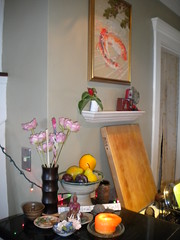
Sacred Kitchen
The energy you approach your cooking with will be translated into the food as it's prepared. They say the kitchen is one of the most important rooms in the home because cooking is the highest art. The food we eat creates our health and consciousness.
The kitchen is also where I spend a lot of my time since cooking yummy vegan macrobiotic food and teaching is my job. I want the area to look beautiful and be a sacred space. When I walk into the kitchen, there are items that evoke positive feelings for me such as peace, abundance, and beauty. For example, we have milagros from Peru, Chinese good luck coins and characters, bowls filled with organic produce, organic teas, and symbols of longevity, prosperity, and welcome.
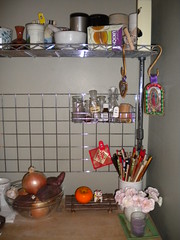
The kitchen is also where I spend a lot of my time since cooking yummy vegan macrobiotic food and teaching is my job. I want the area to look beautiful and be a sacred space. When I walk into the kitchen, there are items that evoke positive feelings for me such as peace, abundance, and beauty. For example, we have milagros from Peru, Chinese good luck coins and characters, bowls filled with organic produce, organic teas, and symbols of longevity, prosperity, and welcome.
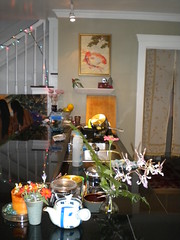
Sacred Kitchen 2
Here is another photo of the kitchen. What kind of feelings does it give you? Leave your comments!
Sunday, September 27, 2009
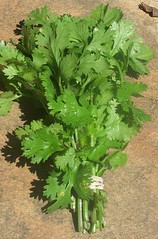
Italian Parsley
While waiting for my cooking demonstration to start at Whole Foods in Kahala a gentleman stopped by and we started chatting about books and Italian parsley. Considering that I'm a huge fan of parsley, I asked him for his recipe. He looked at me with a question mark on his face. "Recipe? Just take the leaves off a bunch of Italian parsley and add a sliced banana. Pour apple juice over the parsley and banana mixture until the apple juice covers the mixture. Blend. Sure tastes better than wheat grass juice." "I agree." "You do?"
Thursday, September 24, 2009
Cooking for the Changing Seasons
Dan and I were just saying yesterday that we can feel a change in the weather. Have you felt this too?
Although it's still quite warm, we can start introducing a little bit of fall cooking to ease our bodies into slightly cooler weather.
Fall Cooking Style (From Aveline Kushi's Complete Guide to Macrobiotic Cooking)
During the late summer, energy begins to flow downward until it becomes very condensed by late autumn. The change from hot to cool weather is often sudden. To mitigate this change, we can begin to adjust our diet in late summer by including more early fall squashes and root vegetables in our meals. In autumn, food is more plentiful than at other seasons. Just as the trees produce a multitude of yellows, golds, oranges, reds, browns, and light greens, these beautiful colors are found in the cornucopia of grains, beans, squashes, root vegetables, and autumn greens, such as kale, turnip greens, daikon tops, and cabbages. Many of the foods harvested in the fall have natural preservative qualities and can be stored for several months to be used through the cold winter and into the spring. Millet and round vegetables, such as onions, turnips, cabbages, and squashes, may be served more frequently in the late autumn months. During the summer months, the kidneys and bladder are often overworked because of an excess intake of liquids, fruits, raw foods, and salty snack items in an attempt to balance the extreme heat. In autumn, the results of this imbalance are experienced in colds, coughs, and other sicknesses of adjustment. Stronger cooking in autumn, as well as the change in weather, starts to discharge this excess. At this season, we can begin to introduce more rich tastes and styles of cooking into our menus, such as bean stews, fried or deep fried foods, creamy grain stews, sweet rice and mochi, hot amasake, and pureed squash soup and squash pies. Dishes can be prepared with longer cooking times and styles, such as long, slow nishime-style boiling, long time sautéing, or kinpira style braising. Vegetables may be cut in larger slices and chunks for longer, more slowly cooked dishes. Sea vegetable dishes can become hardier and include tempeh, dried tofu, or soybeans. In autumn, foods may start to be seasoned with a little more sea salt and a little more oil. The amount of raw foods served can be substantially reduced and dried or cooked fruits used more in preparing desserts.
Although it's still quite warm, we can start introducing a little bit of fall cooking to ease our bodies into slightly cooler weather.
Fall Cooking Style (From Aveline Kushi's Complete Guide to Macrobiotic Cooking)
During the late summer, energy begins to flow downward until it becomes very condensed by late autumn. The change from hot to cool weather is often sudden. To mitigate this change, we can begin to adjust our diet in late summer by including more early fall squashes and root vegetables in our meals. In autumn, food is more plentiful than at other seasons. Just as the trees produce a multitude of yellows, golds, oranges, reds, browns, and light greens, these beautiful colors are found in the cornucopia of grains, beans, squashes, root vegetables, and autumn greens, such as kale, turnip greens, daikon tops, and cabbages. Many of the foods harvested in the fall have natural preservative qualities and can be stored for several months to be used through the cold winter and into the spring. Millet and round vegetables, such as onions, turnips, cabbages, and squashes, may be served more frequently in the late autumn months. During the summer months, the kidneys and bladder are often overworked because of an excess intake of liquids, fruits, raw foods, and salty snack items in an attempt to balance the extreme heat. In autumn, the results of this imbalance are experienced in colds, coughs, and other sicknesses of adjustment. Stronger cooking in autumn, as well as the change in weather, starts to discharge this excess. At this season, we can begin to introduce more rich tastes and styles of cooking into our menus, such as bean stews, fried or deep fried foods, creamy grain stews, sweet rice and mochi, hot amasake, and pureed squash soup and squash pies. Dishes can be prepared with longer cooking times and styles, such as long, slow nishime-style boiling, long time sautéing, or kinpira style braising. Vegetables may be cut in larger slices and chunks for longer, more slowly cooked dishes. Sea vegetable dishes can become hardier and include tempeh, dried tofu, or soybeans. In autumn, foods may start to be seasoned with a little more sea salt and a little more oil. The amount of raw foods served can be substantially reduced and dried or cooked fruits used more in preparing desserts.


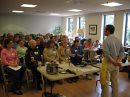
Senior Macrobiotic Teacher and Counselor Coming to Honolulu
I was living in Japan when I started macrobiotics. I managed to find a counselor in the area, and plunged headlong into learning how to cook. From there, I became engrossed in all the lectures I could possibly attend, even though they were in Japanese.
How I would have loved to hear them all in English.
This is why I am so thrilled Warren is coming.
I first met him in Vermont, when I was working as a Cooking Class Volunteer, and again two more consecutive years after that as the Cooking Class Coordinator.
I have to say, he's brilliant. Every time I hear him lecture, I learn so much.
It's so exciting that he'll be here!!
How I would have loved to hear them all in English.
This is why I am so thrilled Warren is coming.
I first met him in Vermont, when I was working as a Cooking Class Volunteer, and again two more consecutive years after that as the Cooking Class Coordinator.
I have to say, he's brilliant. Every time I hear him lecture, I learn so much.
It's so exciting that he'll be here!!
Wednesday, September 02, 2009
Body Scrub
This week I was blessed to go to a Korean Spa for the first time. Part of the day's bliss was enjoying a body scrub. After sitting in the heated pool for about 30 minutes to soften my skin, a lovely Korean woman invited me onto a table, much like a massage table, and scrubbed my body from head to toe, followed by pouring hot water over me. It's pretty shocking to see the amount of dead skin that gets exfoliated.
This procedure reminds me of the body scrub recommended in macrobiotics which is an equally wonderful way of achieving the same results: clear, soft, radiant, smooth, youthful skin; better circulation; and removal of toxins from the body.
How do you do it?
Get a large bowl or a bucket of hot water, as hot as you can tolerate, and dunk a washcloth into it. Squeeze out the excess water, and scrub your body from head to toe. When the washcloth cools down, put it back in the water and repeat squeezing it out and rubbing your body. A good body scrub takes about 15-20 minutes and should make your skin a little bit pink.
When you do this daily (or twice daily), it helps to move any stagnated energy through your body.
A body scrub in the morning will help wake you up and energize you for the day, and one in the evening will help you relax and fall asleep more easily.
This procedure reminds me of the body scrub recommended in macrobiotics which is an equally wonderful way of achieving the same results: clear, soft, radiant, smooth, youthful skin; better circulation; and removal of toxins from the body.
How do you do it?
Get a large bowl or a bucket of hot water, as hot as you can tolerate, and dunk a washcloth into it. Squeeze out the excess water, and scrub your body from head to toe. When the washcloth cools down, put it back in the water and repeat squeezing it out and rubbing your body. A good body scrub takes about 15-20 minutes and should make your skin a little bit pink.
When you do this daily (or twice daily), it helps to move any stagnated energy through your body.
A body scrub in the morning will help wake you up and energize you for the day, and one in the evening will help you relax and fall asleep more easily.
Easy Lentil Soup Recipe
When I'm looking for a quick, easy, and inexpensive but delicious and nutritious meal, I put together a lentil soup. Lentils are low on the glycemic index, low in calories, and high in fiber and protein.
Lentil Soup
1/2 cup lentils (green or French)
1 onion, diced
1 carrot, diced
1 stalk celery, diced
1/2 cup organic corn
1/2 cup winter squash, kabocha or butternut, diced
1/4 cup burdock root (optional, for a smoky flavor)
1 to 2 tsp thyme
miso or sea salt, to taste
4 to 6 cups water
bay leaf, optional
Rinse the lentils and place in a pot with the water and bay leaf. Bring to a boil and cook for about 20 minutes. Meanwhile, cut all the vegetables. Add them to the lentils along with the thyme. Cook for an additional 15 to 20 minutes, or until the vegetables are soft. Season with sea salt or miso to taste.
Lentil Soup
1/2 cup lentils (green or French)
1 onion, diced
1 carrot, diced
1 stalk celery, diced
1/2 cup organic corn
1/2 cup winter squash, kabocha or butternut, diced
1/4 cup burdock root (optional, for a smoky flavor)
1 to 2 tsp thyme
miso or sea salt, to taste
4 to 6 cups water
bay leaf, optional
Rinse the lentils and place in a pot with the water and bay leaf. Bring to a boil and cook for about 20 minutes. Meanwhile, cut all the vegetables. Add them to the lentils along with the thyme. Cook for an additional 15 to 20 minutes, or until the vegetables are soft. Season with sea salt or miso to taste.
Warren Kramer coming to Honolulu

October 13, 2009 to October 18, 2009
“Optimal Health and Healing Through Macrobiotics”
With senior macrobiotic educator and health counselor Warren Kramer, an internationally renowned senior macrobiotic educator and health counselor.
Enjoy a variety of ways to participate, including:
Cooking Classes- Cooking for Hearty Appetites, Cooking for Natural Beauty
Lectures- Restoring our Natural Healing Ability, Smart Bone Health, What do Yin and Yang Have to do with Me?
Health Consultations
What is a Consultation?
Who is Warren Kramer?
Testimonials About Warren
SIGN UP NOW! EARLY PAYMENT DISCOUNT AVAILABLE.
For schedule and prices please go to WWW.MACROBIOTICHAWAII.COM
Saturday, July 18, 2009
Mission Accomplished! Praise for Mexican Macrobiotic Community Dinner
Hello Leslie,
I just want to say "Thank You" for the unbelievable Enchilada! Vegetable soup had quite a bit of happy looking veggies, the simple green salad was also super nutritious. I see many people don't realize what the real food taste like, I mean this good has to be normal? That means we're consuming too much of added chemicals, processed food everyday. The excellent ingredients you and Kathy offers for us is always extraordinary. I don't mean to exaggerate, you are just TOO GOOD.
My self-claimed food critic husband asked me for one bite looking at my enchilada, as you know, same things happened like Tofu Cheesecake incident on June 19th, remember? 2/3 of my enchilada was stolen again. His strong preconception toward Macrobiotic way of living started to change. He admits he was wrong, just wanted to eat "good food" not vegetables, weeds with sprinkles. And that good food is called Macrobiotic food, people like him exists everywhere. If they're suspicious, just bring them in to Leslie's community dinner, let them try first, then they'll know what's missing!
Thank you again. Kaori
I just want to say "Thank You" for the unbelievable Enchilada! Vegetable soup had quite a bit of happy looking veggies, the simple green salad was also super nutritious. I see many people don't realize what the real food taste like, I mean this good has to be normal? That means we're consuming too much of added chemicals, processed food everyday. The excellent ingredients you and Kathy offers for us is always extraordinary. I don't mean to exaggerate, you are just TOO GOOD.
My self-claimed food critic husband asked me for one bite looking at my enchilada, as you know, same things happened like Tofu Cheesecake incident on June 19th, remember? 2/3 of my enchilada was stolen again. His strong preconception toward Macrobiotic way of living started to change. He admits he was wrong, just wanted to eat "good food" not vegetables, weeds with sprinkles. And that good food is called Macrobiotic food, people like him exists everywhere. If they're suspicious, just bring them in to Leslie's community dinner, let them try first, then they'll know what's missing!
Thank you again. Kaori
Thursday, July 16, 2009
Love Your Liver & Gallbladder
This was in a newsletter I got from respected macrobiotic teacher Jane Stanchich at Great Life Global.
Love Your Liver
Learn about the vital importance of your liver and how to best
nourish this amazing organ, especially in the Spring.
• Reduce fatty, fried, oily foods, including chips and baked goods.
• Eat plenty of vegetables, especially dark leafy greens.
• Use dashes of lemon juice and brown rice vinegar in foods.
• Get plenty of outdoor recreation with lots of fresh air breathing.
• Get plenty of sleep, sing and laugh often, cultivate a joy of life.
Glorify Your Gall Bladder
The Gall Bladder is known as the “Soap Dispenser” of the
body. (See illustration at right with liver on top and greenish gall bladder
nestled underneath.) Along with the liver, the gall bladder digests fats
and performs hundreds of vital functions. The American diet is, on
average, 40% fat, including harmful hydrogenated fats in
processed foods. We recommend that you avoid such fats, and
reduce saturated fats. Eating a plant-based diet and reducing the
consumption of animal foods such as meat, eggs, and dairy creates
a healthier digestive system and improves the overall function of
the liver and gall bladder. Learning the basic symptoms that can
indicate liver/gall bladder disorders can help you prevent serious
flare-ups and pain. Consult a health professional as needed.
Symptoms of Liver/Gallbladder Imbalance
• Indigestion • Eye Disorders • PMS
• Criticism • Irritability • Muscle Pain
• Anger • Gas/Bloating • Pain on right side
• Jaundice • Insomnia • Menstrual Disorders
• Nausea • Migraine Headache • Jealousy
• Fatigue • Sore “heavy” legs • Violence
Love Your Liver
Learn about the vital importance of your liver and how to best
nourish this amazing organ, especially in the Spring.
• Reduce fatty, fried, oily foods, including chips and baked goods.
• Eat plenty of vegetables, especially dark leafy greens.
• Use dashes of lemon juice and brown rice vinegar in foods.
• Get plenty of outdoor recreation with lots of fresh air breathing.
• Get plenty of sleep, sing and laugh often, cultivate a joy of life.
Glorify Your Gall Bladder
The Gall Bladder is known as the “Soap Dispenser” of the
body. (See illustration at right with liver on top and greenish gall bladder
nestled underneath.) Along with the liver, the gall bladder digests fats
and performs hundreds of vital functions. The American diet is, on
average, 40% fat, including harmful hydrogenated fats in
processed foods. We recommend that you avoid such fats, and
reduce saturated fats. Eating a plant-based diet and reducing the
consumption of animal foods such as meat, eggs, and dairy creates
a healthier digestive system and improves the overall function of
the liver and gall bladder. Learning the basic symptoms that can
indicate liver/gall bladder disorders can help you prevent serious
flare-ups and pain. Consult a health professional as needed.
Symptoms of Liver/Gallbladder Imbalance
• Indigestion • Eye Disorders • PMS
• Criticism • Irritability • Muscle Pain
• Anger • Gas/Bloating • Pain on right side
• Jaundice • Insomnia • Menstrual Disorders
• Nausea • Migraine Headache • Jealousy
• Fatigue • Sore “heavy” legs • Violence
Tuesday, July 14, 2009
Is the health food store "healthy"?
There is an assumption that if an item is in the health food store, it must be healthy. It's up to the consumer to understand that this is not always true. The consumer can do this by reading the labels before buying something! For example, a new vegan cheese appeared on the shelf in one of the health food stores here. Turn it over to read the label, and guess what's in it? It consists of: organic soy base, modified food starch, soybean oil, calcium sulfate, tapioca starch, corn syrup solids, carrageenan, sea salt, tara gum, sodium phosphates, natural flavor, carotenal (color). It's just as bad as any other processed food with additives and preservatives, and it surely doesn't even taste that good to boot. High fructose corn syrup is not something we want to be consuming!! What is "modified food starch" and "natural flavors"? This is the kind of food that makes not only us, but also the environment sick, and has a high carbon footprint. We have to be discerning enough to know that the label which claims "nutritional foods" and "excellent source of calcium" is misleading. We can get gluten free and cholesterol free foods that have no transfats by eating whole and unprocessed foods. The key word is "unprocessed" whether you're buying from the health food store or not. So the answer to the question is that the health food store is healthy when you buy grains, beans, vegetables, sea vegetables, and other raw ingredients and prepare them into healthful and tasty dishes that nourish and satisfy. Avoid the processed items for best health.
Saturday, July 11, 2009
Using leftovers creatively
Last night for dinner we had tempeh spring rolls with peanut sauce. I sent the extras with Dan for his lunch at the farm, but I still had some tempeh that was leftover. For lunch, I minced garlic and ginger, and sauteed these in toasted sesame oil with onion, carrots, and lacinato kale. I topped this with the leftover peanut sauce and served it with a side of brown rice. So delicious!! How do other people use their leftovers creatively?
Subscribe to:
Posts (Atom)
